Anantara Convento di Amalfi Wedding: Laura & Koury
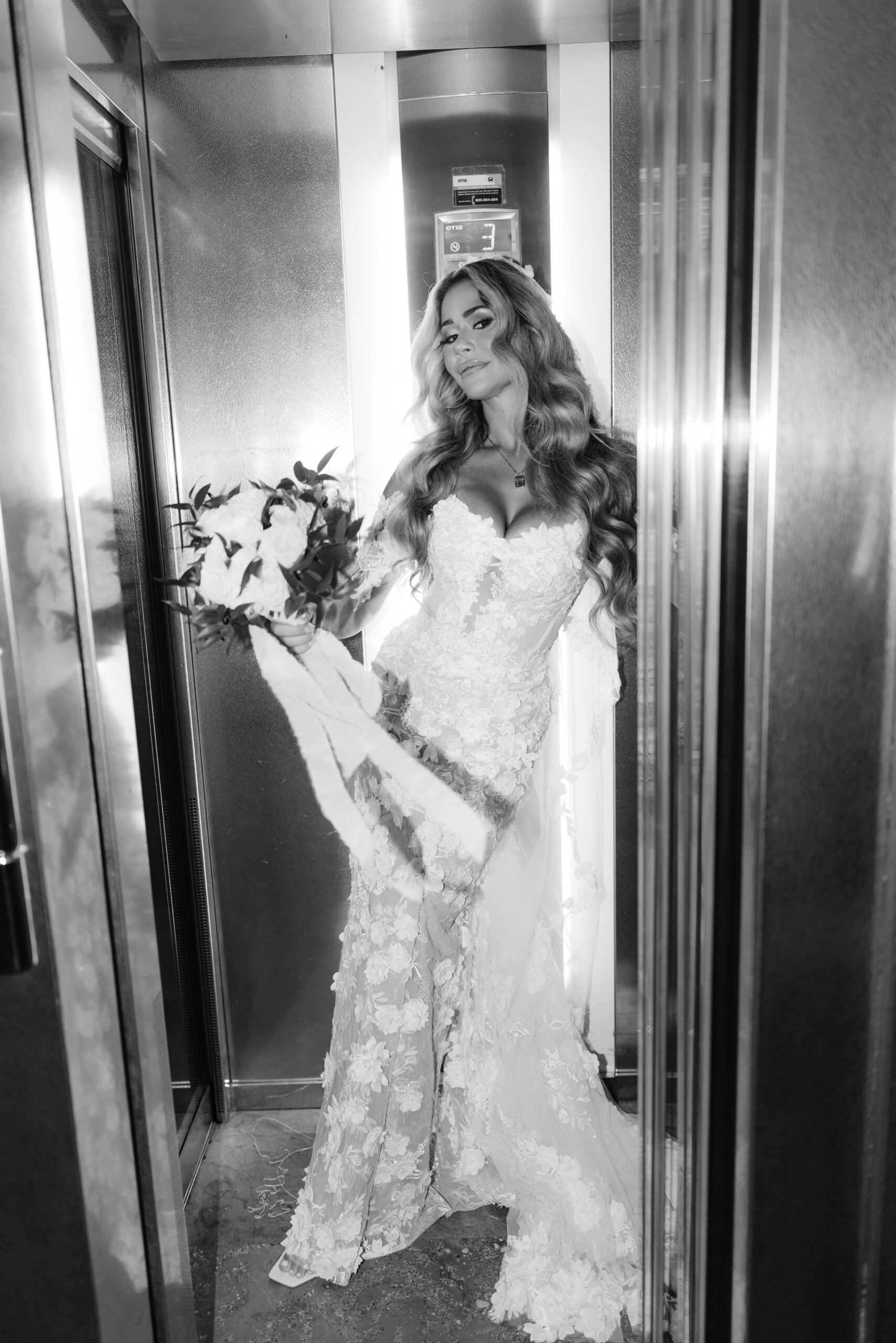
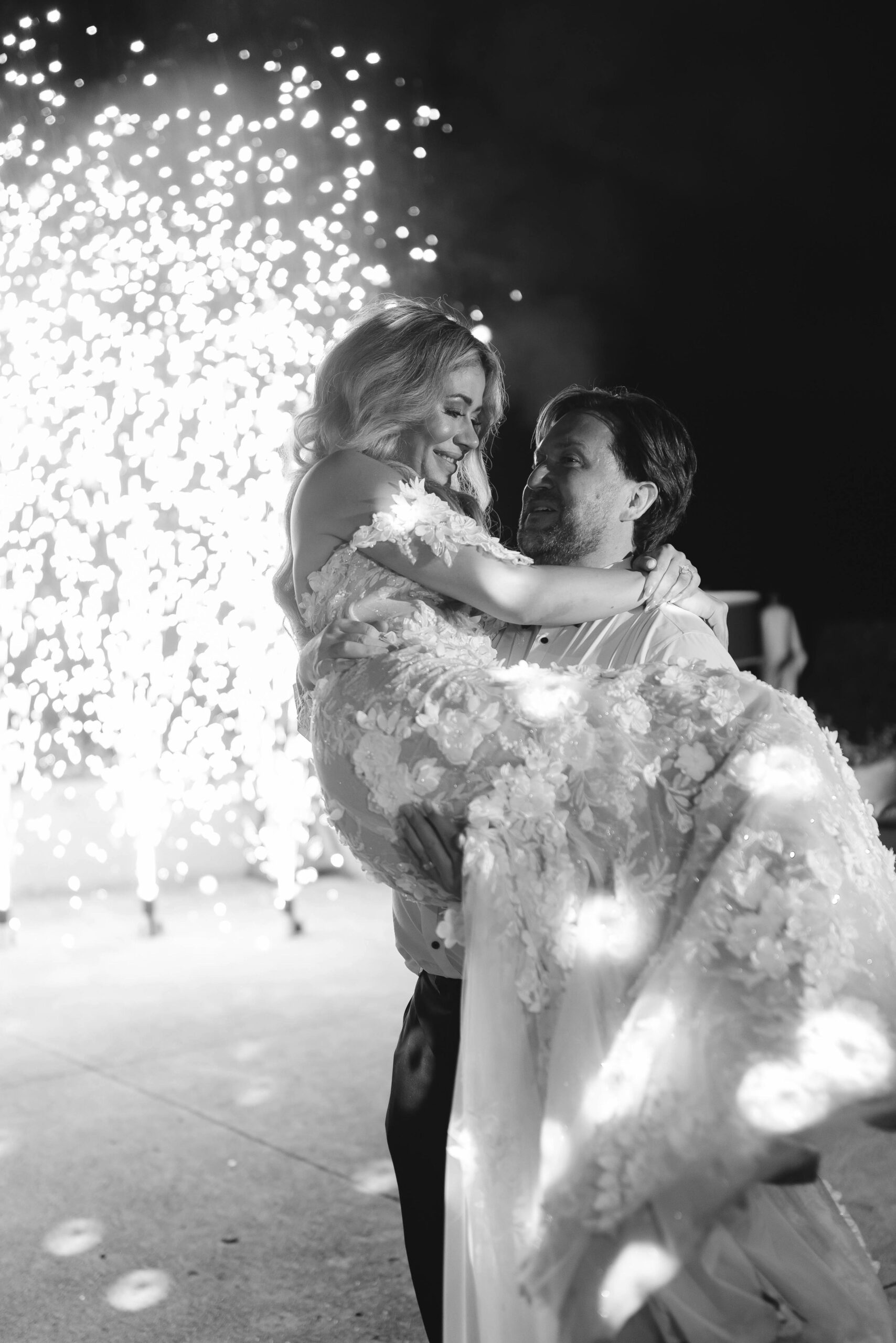
An editorial and candid wedding film for Laura and Koury at Anantara Convento di Amalfi, one of the most distinctive venues on the Amalfi Coast.
A wedding can look editorial without feeling staged.
The strongest magazine-inspired images often begin with something completely real: a spontaneous expression, an instinctive movement or the way two people naturally occupy a space together.
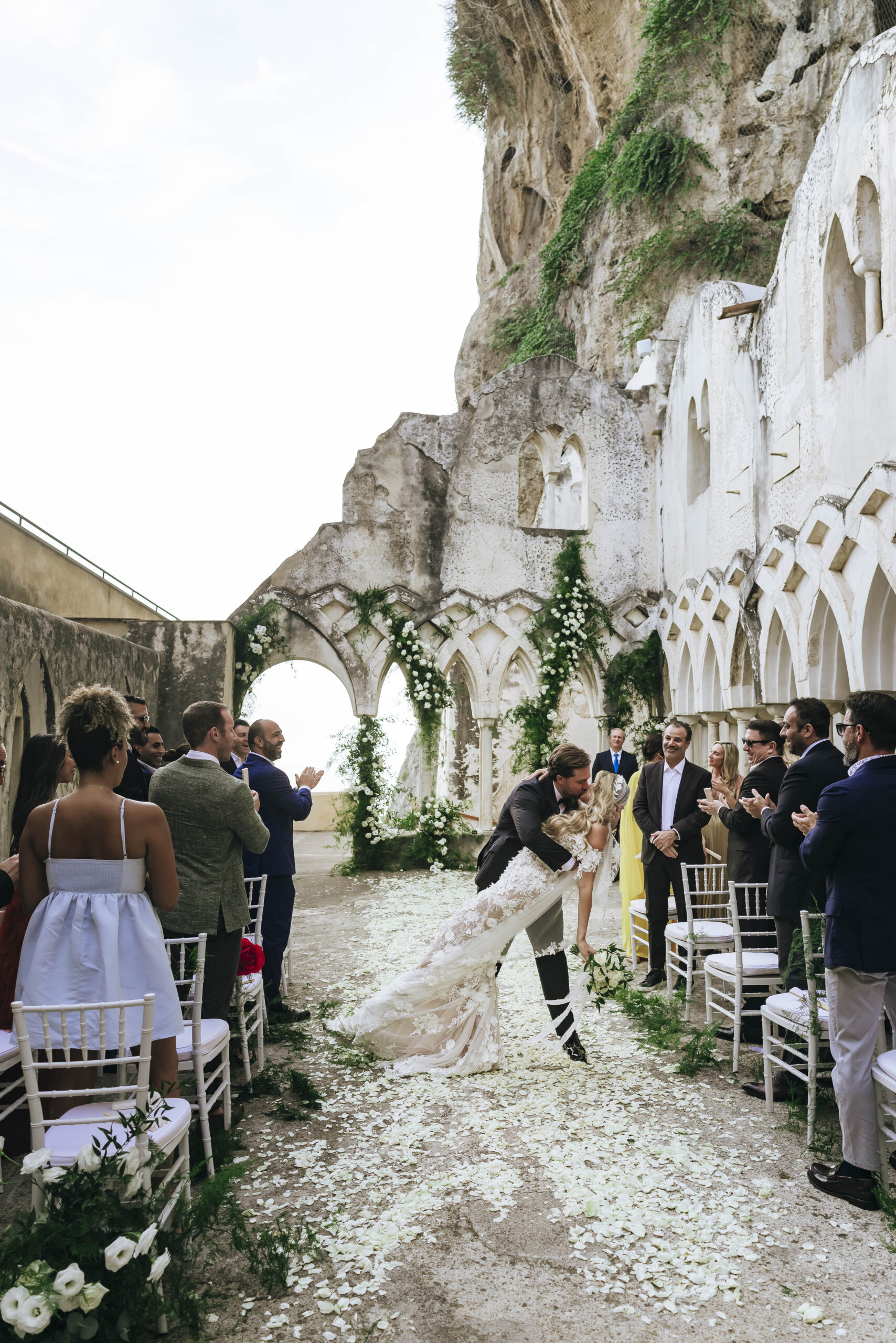
Laura and Koury’s Anantara Convento di Amalfi wedding offered the ideal setting to explore this balance. The historic architecture created a refined visual structure, while the couple and their guests gave every frame its emotional identity.
For me, candid wedding videography and editorial imagery are not opposing approaches. One preserves what genuinely happened. The other uses light, composition and movement to give those memories a distinctive visual language.
Candid filmmaking is built around observation and anticipation. It means recognising a meaningful moment before it disappears, without interrupting it or asking someone to repeat what has already happened.
An editorial approach introduces a different kind of attention. It considers the relationship between the couple, the architecture, the light and the composition of the frame.
Direction can be used, but only when it adds something to the image. A suggestion about where to stand or how to move through a space may be enough. The objective is never to transform the wedding into an extended production.
In Laura and Koury’s wedding, these two approaches could move naturally between each other. A carefully composed portrait could be followed by a laugh, a changing expression or an interaction that nobody had planned.
The word “editorial” is often associated with fashion magazines, controlled lighting and professional models. Applied to a real wedding, however, it should not mean replacing personality with performance.
A couple should still recognise themselves in their wedding images. Their posture, expressions and way of interacting should remain authentic, even when a frame has been created with greater visual intention.
This is why I prefer short, focused portrait sessions rather than removing the couple from their celebration for a prolonged photoshoot.
Editorial wedding filmmaking works best in small doses. It creates strong visual moments that give the story shape, while candid observation preserves everything developing around them.
You can discover more about my documentary and editorial approach to wedding filmmaking.
Anantara Convento di Amalfi Grand Hotel is not simply a beautiful background. Its architecture actively influences how a wedding can be photographed and filmed.
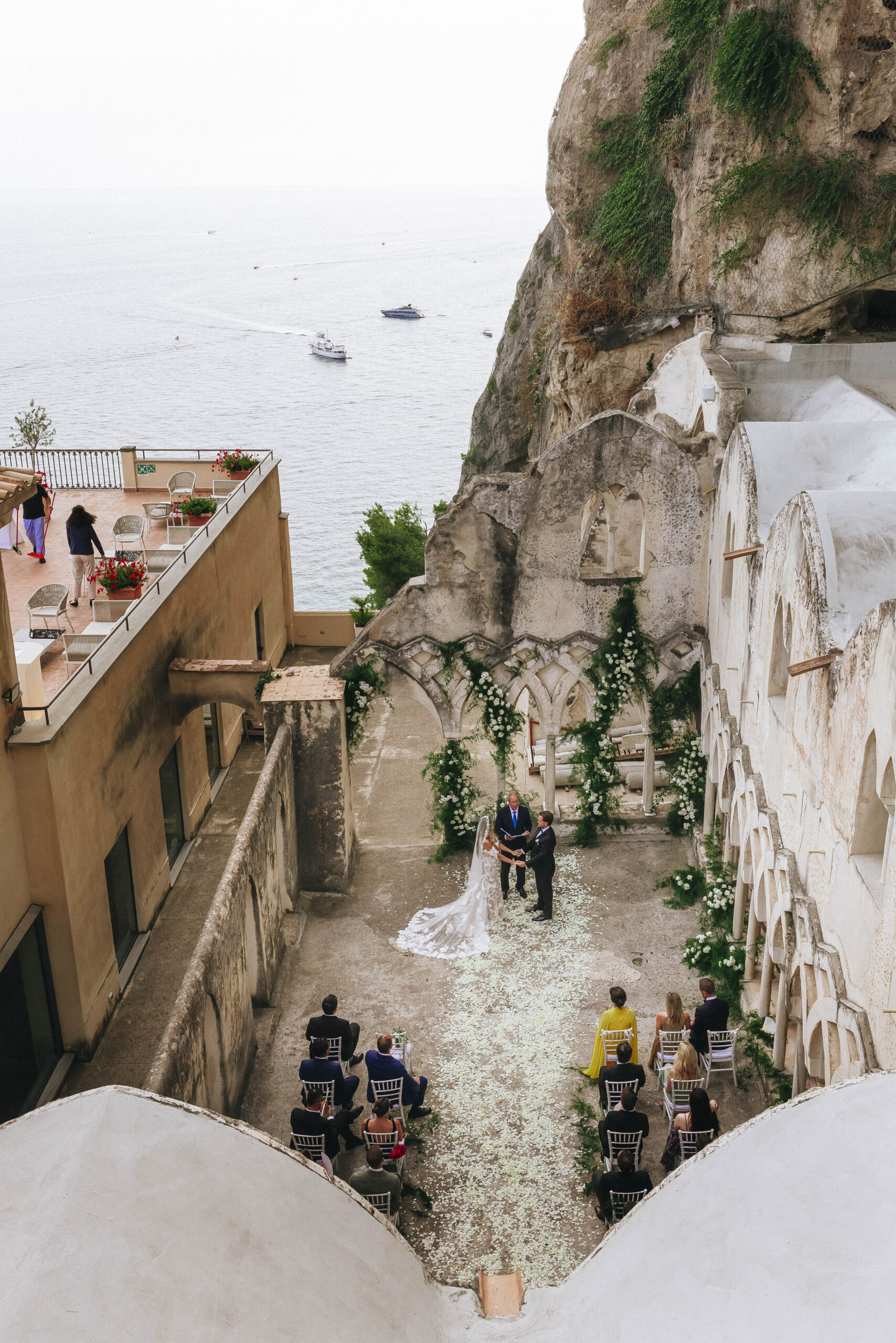
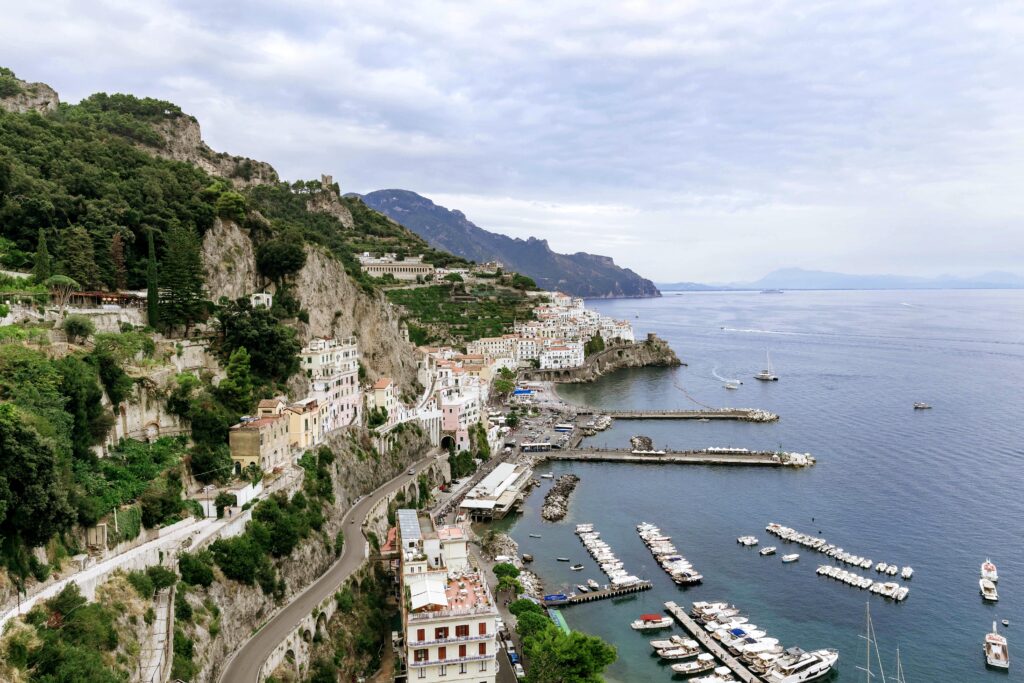
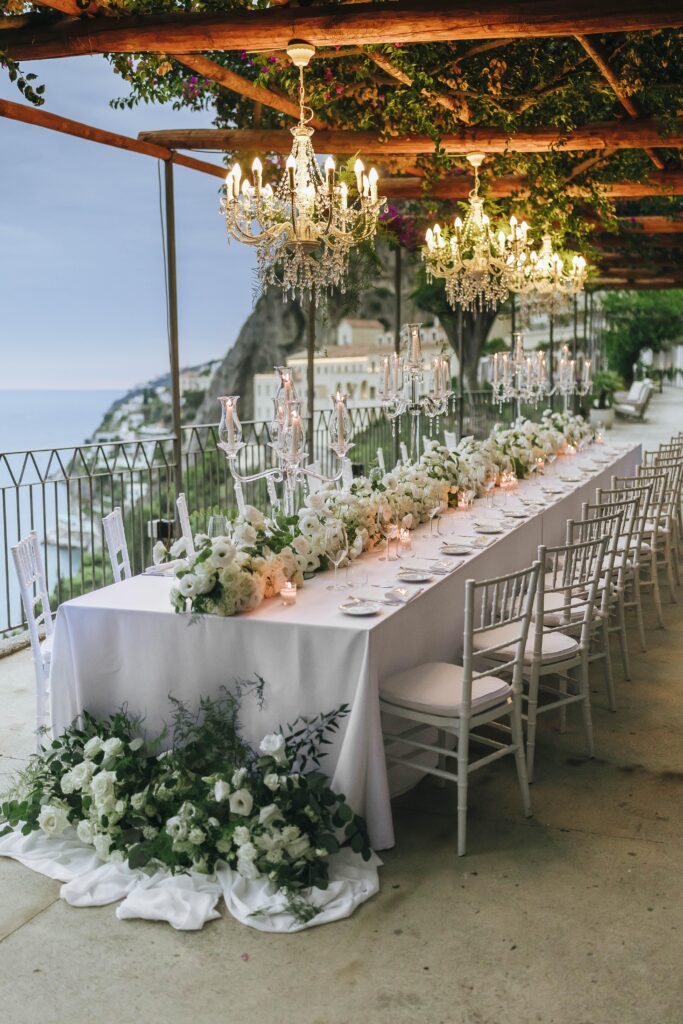
The property occupies a former 13th-century convent built into the cliffside above Amalfi. The original cloister, chapel, stone corridors and historic details create an intimate atmosphere, while the panoramic terraces open towards the Mediterranean Sea.
This contrast gives a wedding several visual identities without requiring the celebration to move between unrelated locations.
Inside the convent, arches, columns and shadow create depth, symmetry and naturally editorial compositions. Outside, the sea, sky and changing Mediterranean light introduce movement and a greater sense of scale.
The venue already possesses a powerful visual language. The role of the filmmaker is not to compete with it, but to understand how the couple and their guests move through it.


The cloister is one of the most recognisable spaces at Anantara Convento di Amalfi.
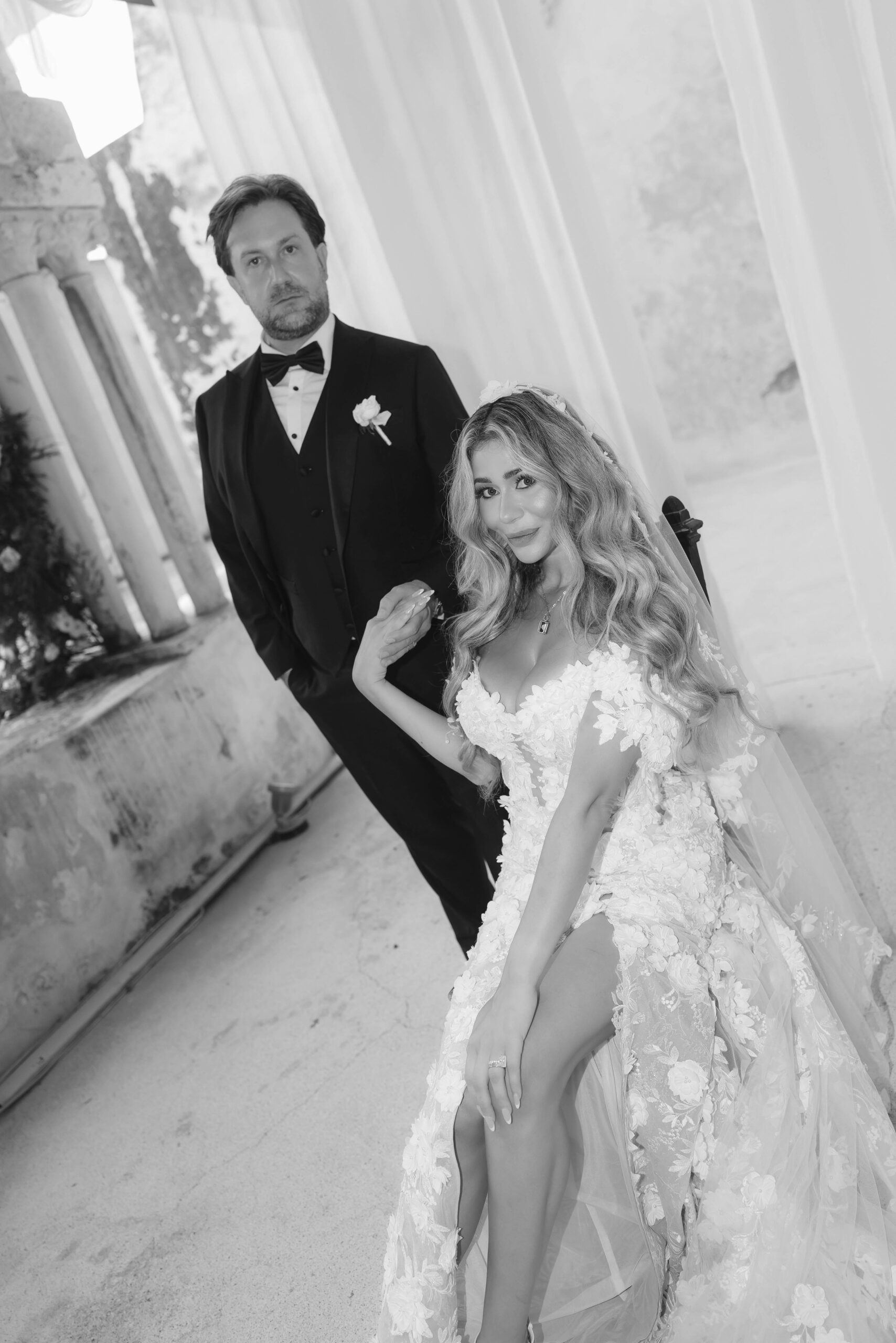
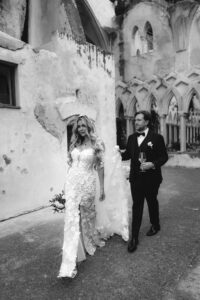
Its repeating arches and stone columns provide balance and structure before any direction is introduced. This makes it particularly suitable for editorial wedding portraits.
Laura and Koury could be placed within a precise composition without losing their personalities. A movement of the dress, a glance or an unexpected reaction was enough to break the architectural symmetry and make the image feel alive.
This is the balance I am always searching for: a frame that could belong in a magazine and a moment that could only belong to that particular couple.
One of the venue’s greatest strengths is the transition between its historic interiors and its open views of the Amalfi Coast.
The cloister encourages quieter and more considered imagery. The terraces introduce wind, movement, changing light and the expanse of the Mediterranean.
These contrasts help create a wedding story with a natural visual progression. The film can move from intimate frames to wider landscapes while maintaining a clear connection to the same location.
Anantara Convento di Amalfi does not need to appear in every shot to remain present in the story. Its textures, light and relationship with the sea give the entire wedding a recognisable sense of place.
Photography was created by Rellini Art Studio, whose visual language also combines documentary observation with editorial elegance.
Working together felt natural because we shared the same understanding of the wedding day. Refined portraits were important, but they never needed to interrupt the emotional rhythm of the celebration.
When a candid moment was developing, we gave it space. When the architecture or light offered an opportunity for a stronger portrait, the direction remained concise and focused.
This understanding between photographer and filmmaker is essential. The couple should never feel that photography and video are two separate productions competing for their attention.
The collaboration allowed still and moving images to feel connected: elegant but spontaneous, considered but never distant from the people inside them.
The wedding was planned by Mr and Mrs Wedding in Italy, specialists in destination weddings on the Amalfi Coast.
Images can feel effortless only when the day has a strong structure behind them. A carefully considered timeline gives the couple time to experience the celebration while allowing the creative team to work without generating unnecessary interruptions.
This becomes particularly important at a venue with several historic and panoramic spaces. Movements between the cloister, terraces and reception areas need to follow the experience of the guests while responding to changes in light.
The planning should not become the visible subject of the film. Its quality can be felt in the way every chapter unfolds naturally.
A balanced timeline gives the photographer and filmmaker space to observe what is happening. It is more useful than a long list of images that must be recreated regardless of the light, atmosphere or emotions of the moment.
Not every part of a wedding needs to be directed. Guidance is most effective when it is brief and connected to a specific portrait, movement or architectural setting.
A venue such as Anantara Convento di Amalfi offers many visually powerful spaces. Selecting a small number of them helps create stronger images without turning the wedding into a tour of the property.
A changing expression, an unexpected movement or a guest entering the frame can sometimes make an image more memorable. Editorial does not need to mean clinically perfect.
Composition may attract the eye, but sound is often what brings a memory back.
Footsteps beneath the stone arches, fabric moving in the sea breeze, voices, applause, music and laughter give the images an emotional dimension that cannot be created through styling.
This is why an editorial wedding film should never become only a sequence of beautiful portraits. The portraits create visual punctuation. Real sound and spontaneous interactions reveal how the celebration actually felt.
Yes. Most of the wedding can be documented naturally, while a limited number of portraits are created through careful use of light, composition and simple direction. The two approaches support each other when neither is allowed to dominate the entire day.
The venue combines a historic cloister, chapel, stone architecture, panoramic terraces and Mediterranean views. These elements provide visual variety and strong compositions within one coherent setting.
No. Short and carefully planned portrait sessions are usually more effective. They allow the couple to receive refined images without spending an excessive part of the wedding away from their guests.
Both professionals need access to the same moments without repeatedly directing or interrupting the couple. A shared visual approach creates a more relaxed experience and a consistent final result.
A venue can give a wedding its visual identity, but the people inside it must remain at the centre of the story.
If you are planning a wedding at Anantara Convento di Amalfi or elsewhere on the Amalfi Coast and want imagery that feels editorial without losing real emotion, tell me what you are planning.
Couple: Laura and Koury
Wedding venue:
Anantara Convento di Amalfi Grand Hotel, Amalfi Coast, Italy
Wedding planning:
Mr and Mrs Wedding in Italy
Photography:
Rellini Art Studio
Wedding videographer:
Luigi Rainone Films
Makeup artist:
Pure Beauty by Michell
Floral design:
Starace Florist
Live music:
EvoStrings
DJ:
Andy Florio

An editorial and candid wedding film for Laura and Koury at Anantara Convento di Amalfi, one of the most distinctive venues on the Amalfi Coast.

An emotional destination wedding at La Villa Hotel in Piedmont, featuring a children’s candy bar, vineyard scenery and fireworks beneath the night sky.
Jacob and Morane’s wedding was full of energy, movement and moments nobody could have planned. A story about candid wedding videography and why the best memories often happen when people forget the camera is there.
©2023 LUIGI RAINONE FILMS | ALL RIGHTS RESERVED | VAT NUMBER 05922800650 | Privacy and Cookie Policy